By Munesu Shoko, Quarrying Africa - Gaining traction - Quarrying Africa
Since the launch of its articulated dump truck (ADT) range in Africa in July 2022, John Deere has achieved notable momentum across the continent. In just over three years, the OEM has built a sizeable and growing installed base, with machines operating successfully in a variety of demanding applications.
This sustained growth reflects more than just sales performance. According to insights shared with Quarrying Africa, John Deere’s progress has been driven by a balanced strategy encompassing market penetration, brand visibility, customer confidence, and, crucially, robust aftermarket support. While the ADT product itself has proven capable in some of Africa’s harshest operating environments, it is the strength of the support ecosystem behind the machines that has underpinned long‑term success.
From launch to long-term growth
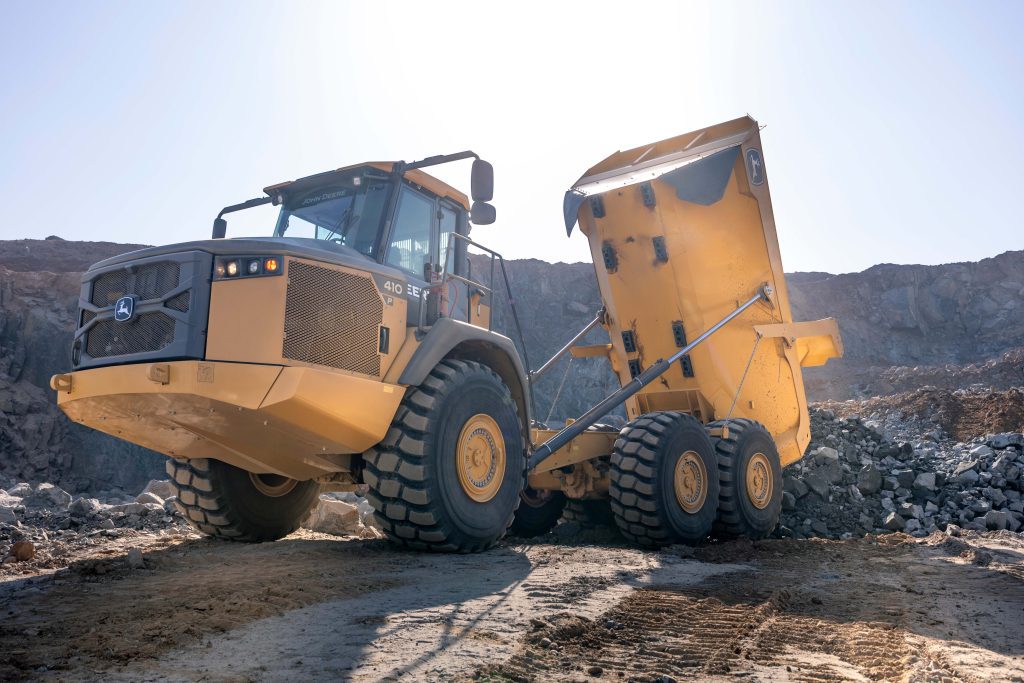
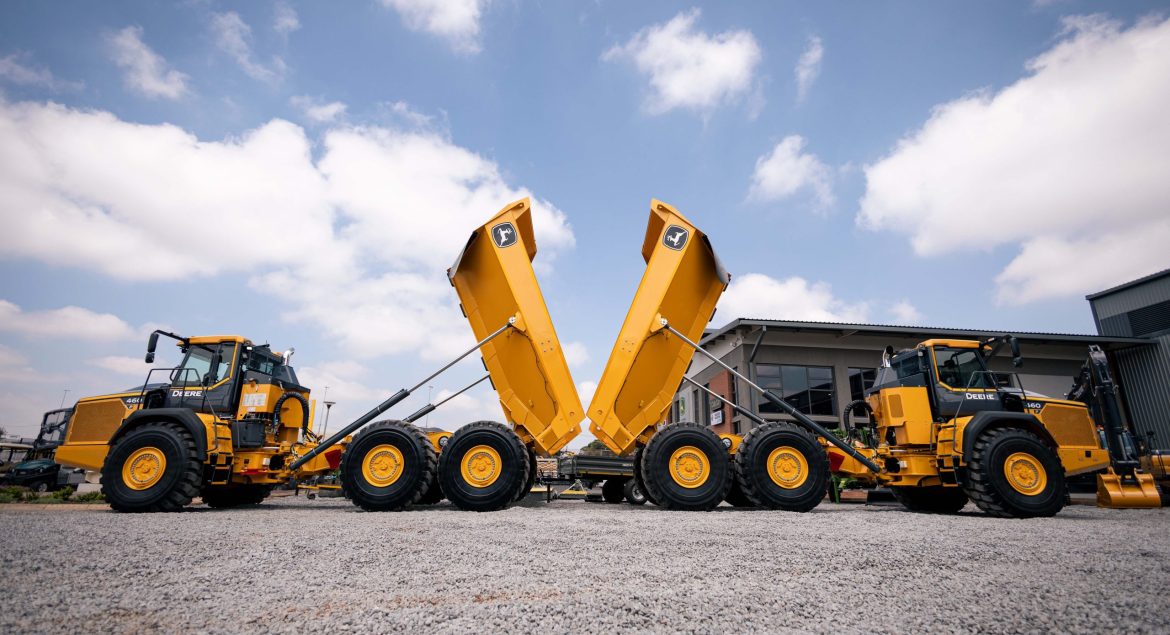
John Deere introduced its production-class equipment range to the African market in July 2022 as part of the second phase of its broader “yellow metal” rollout. Central to this expansion was the launch of the 460E‑II — the first John Deere articulated dump truck to be offered in Africa.
Speaking to Quarrying Africa, Griffiths Makgate, Director: Sales and Marketing, Construction and Forestry for Africa and the Middle East, says the response to the ADT range has exceeded expectations. Today, John Deere ADTs are operating across countries including South Africa, Namibia, Zambia, Ivory Coast, and more recently, Tanzania.
The range has delivered average year‑on‑year growth of approximately 20% since launch. Makgate notes that this growth reflects not only improved revenues, but also increased machine population, deeper market penetration and stronger brand recognition — clear indicators that the ADT offering has transitioned from an introductory phase to a sustainable growth trajectory.
“We always knew the ADT segment would be highly competitive,” says Makgate. “The 460E‑II was the result of extensive research and development informed directly by customer needs. It delivered on productivity, uptime, efficiency and a lower total cost of ownership. Just as important, however, has been the strength of our aftermarket support, which has played a major role in our success to date.”
Early deployments put to the test
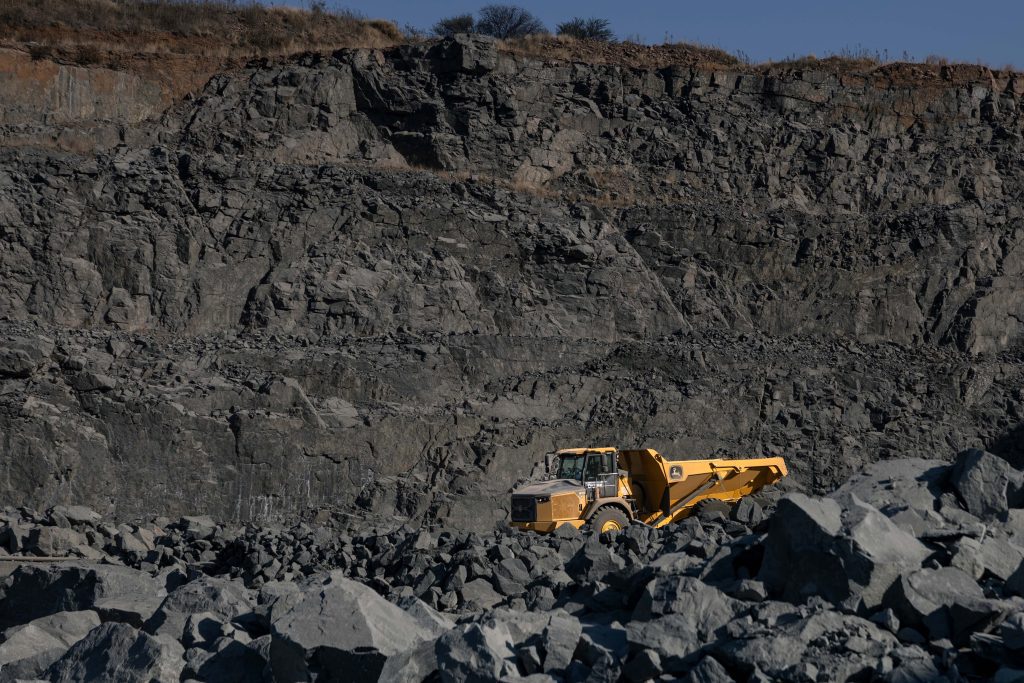
The first six machines delivered into Africa were deployed into two distinctly challenging mining environments. Four units were commissioned at a diamond mine in Namibia, while the remaining two supported copper mining operations in Phalaborwa, South Africa.
According to Makgate, the Namibian site proved to be one of the toughest proving grounds for the 460E‑II. Persistently wet, muddy and slippery underfoot conditions created a punishing operating environment.
Despite this, the machines performed as intended. A standout feature was John Deere’s Traction Mode, which optimises differential locking to maximise tractive effort and prevent wheel spin in low‑grip conditions.
“Traction Mode locks all four differential locks — one per axle and one in the transmission — allowing fully loaded trucks to move efficiently even in extremely poor conditions,” Makgate explains. “The integration of wheel‑speed sensors with ground‑speed radar ensures the system activates precisely when required.”
In Phalaborwa, while haul surfaces were more stable, extreme heat presented its own challenges. High temperatures often accelerate hydraulic degradation and component wear, yet the John Deere machines continued to operate without major mechanical issues. The ADTs also performed well on sites with tight turning radii, avoiding common side‑shaft and final‑drive failures encountered by competitors.
Performance backed by support
Across both initial sites, the original machines have now accumulated approximately 20 000 operating hours each — and remain productive. While early technical challenges did arise, Makgate highlights the OEM’s ability to respond quickly and decisively.
“Issues will always arise in real‑world operations, but what differentiates brands is how those issues are handled. Our proactive and responsive approach — together with our dealer partners — turned challenges into trust‑building opportunities,” he says.
This experience has led both early customers to significantly expand their John Deere ADT fleets. According to Makgate, this serves as strong validation not only of the machines, but of the support structures surrounding them. Since then, ADT adoption has expanded steadily across the continent, with industry players increasingly familiar with the product’s capabilities.
Expanding the ADT portfolio
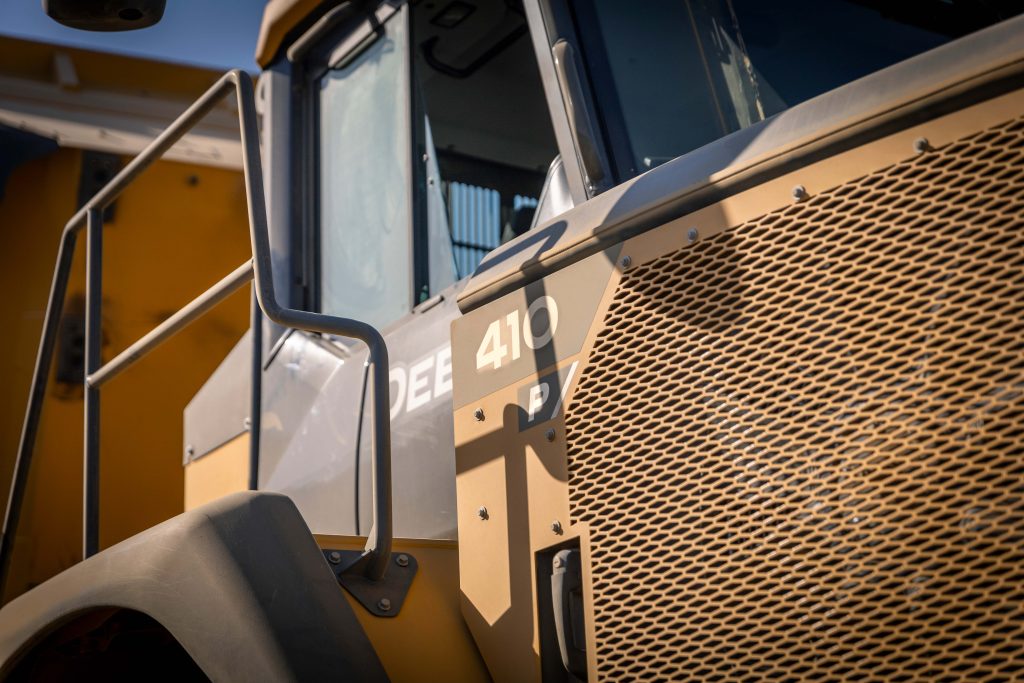
Building on the success of the 460E‑II, John Deere Africa expanded its offering with the P‑Tier ADT range. The 42‑tonne 460 P‑Tier was introduced in April 2024, followed shortly by the 38‑tonne 410 P‑Tier.
Makgate notes that the smaller 410 P‑Tier was developed specifically with the coal sector in mind and has quickly gained traction in South Africa’s Mpumalanga coalfields, positioning itself as a strong contender in that segment.
Designed for modern African job sites
According to John Deere product manager Garrett Adamson, mining and infrastructure sites across Africa are growing in scale and complexity. As a result, performance alone is no longer enough — productivity depends equally on technology, operator comfort, safety and total cost of ownership.
The P‑Tier ADTs place particular emphasis on the operator environment. Quiet, pressurised cabs, intuitive displays, integrated rear‑camera systems and high‑spec seating are designed to reduce fatigue and improve consistency over long shifts. Optional features such as automatic climate control further support operator comfort across extreme temperatures and altitudes.
Visibility and situational awareness are also key focus areas. Product marketing manager Lauren Meyer explains that customers can specify various vision systems, including rear‑camera packages or the Advanced Vision System (AVS), which uses multiple digital cameras integrated with the machine’s articulation to enhance awareness in congested work areas.
Serviceability has also been prioritised. Routine checks and maintenance points are accessible from ground level, complemented by features such as suspension‑lowering for easier access and optional automated lubrication systems — a significant advantage in remote or resource‑constrained operations.
Unified support approach
Ultimately, Makgate credits John Deere’s aftermarket strategy as the defining factor behind the ADT range’s success in Africa. Strong alignment between the OEM and its dealer network has enabled consistent service delivery and rapid response times, reinforcing customer confidence.
“Presenting a united front with our dealer partners has been critical,” he concludes. “By working closely together and staying flexible, we’ve been able to put customers first — and that’s what builds long‑term trust and brand loyalty.”